Pemanfaatan Lahan Sempit untuk Mewujudkan Kemandirian Pangan melalui Sistem Aquaponik dan Budidaya Tanaman Hijau
DOI:
https://doi.org/10.32764/h3pdvh77Keywords:
Limited Land, Aquaponics, Family Medicinal Plants (TOGA), Food Self-Sufficiency, Productive Home YardsAbstract
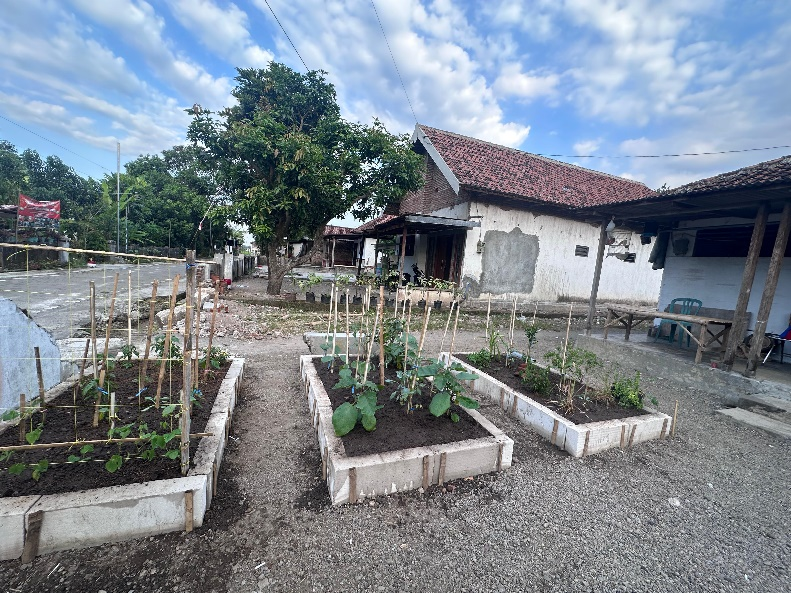
Madiopuro Village, located in Sumobito District, Jombang Regency, is an area where most residents work in the agricultural sector. However, the utilization of home yards remains limited and is often left unused or only partially utilized, causing households to rely heavily on markets to meet their daily food needs. This condition increases household vulnerability to food price fluctuations and supply limitations. This community service program aims to improve household food self-sufficiency through the utilization of limited land by implementing an aquaponic system integrated with the cultivation of family medicinal plants (TOGA), fast-growing vegetables, and fruit crops. The implementation method used a direct approach through hands-on field practices by utilizing residents’ home yards as demonstration sites. Activities included the construction of a simple aquaponic system, cultivation of medicinal plants, vegetables, and fruits, as well as assistance in plant and fish maintenance. The results showed an increase in community knowledge and awareness regarding the productive use of home yards as an alternative food source. The aquaponic system successfully produced catfish as a source of animal protein and fresh vegetables in a sustainable manner. This program has a positive impact on enhancing household food self-sufficiency, reducing household expenditures, and promoting environmentally friendly agricultural practices. With continuous assistance, this program has the potential to be developed as a sustainable household-scale agricultural model to improve community welfare.
Downloads
Published
Issue
Section
License
Copyright (c) 2026 Faisol Hidayatulloh, Muhammad Farid Nasrulloh, Mohammad Faridl Darmawan, Rizal Hendriansyah, Rohmat Hidayat

This work is licensed under a Creative Commons Attribution 4.0 International License.